
The Biblical Case for Postmillennialism (The Postmillennial Vision, Pt. 1)
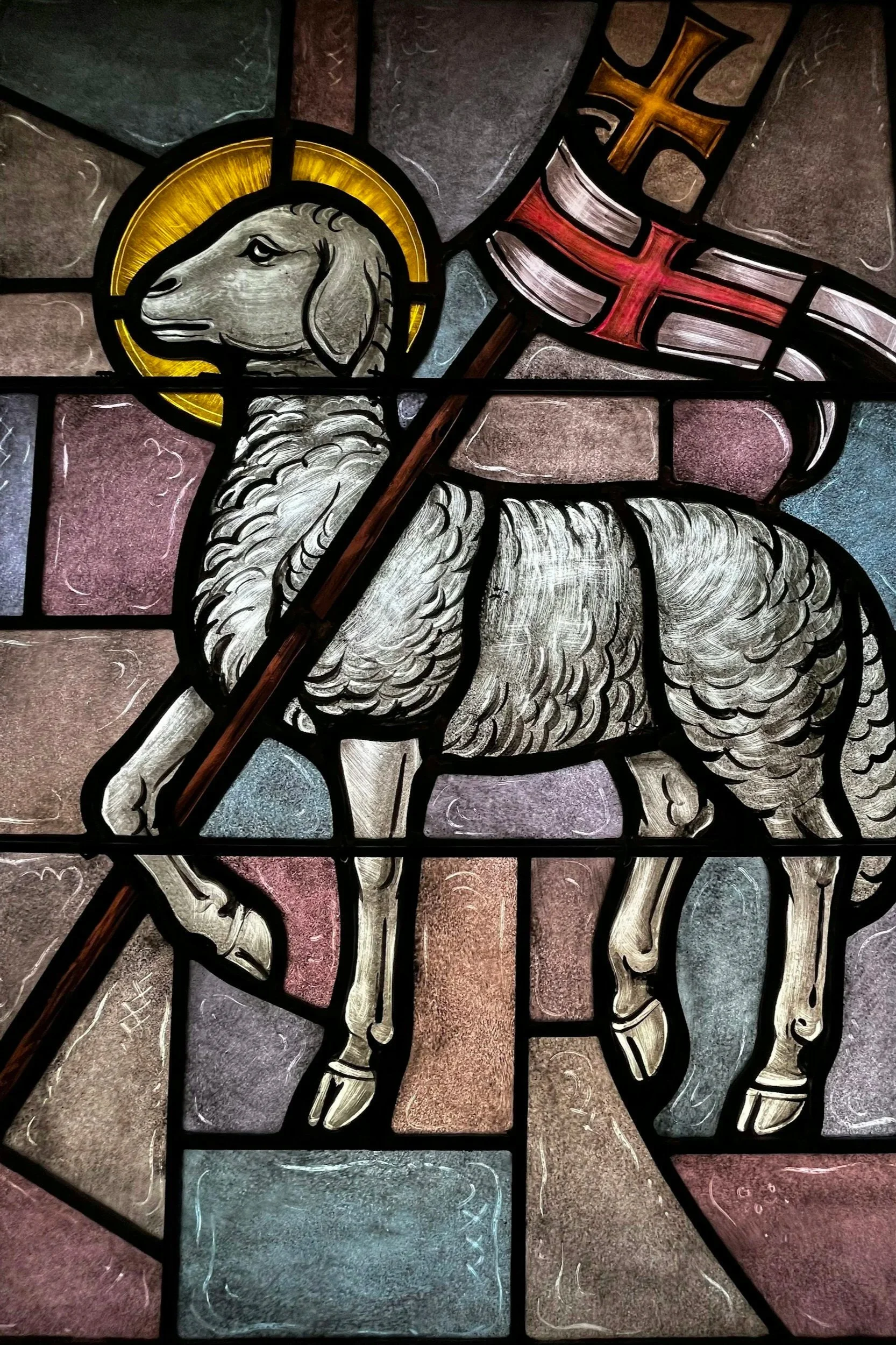
Postmillennialism teaches that Christ will progressively subdue the nations through the Spirit-powered ministry of the Church, especially the ministry of word and prayer.
While my last article outlined the prominent Christian views of the Millennium in Revelation 20, this article provides a biblical defense of the postmillennial view. In my next article, I offer a theological defense and outline important implications of this view for Christians.
Postmillennialism is often caricatured as mere cultural optimism or naive confidence in what Christians can actually accomplish in a world diametrically opposed to them. In reality, it is neither. It is a sober-minded conclusion derived from Scripture about what God has promised to accomplish in history through the reign of his Son as the gospel advances in the world. Postmillennialism teaches that Christ will progressively subdue the nations through the Spirit-powered ministry of the Church, especially the ministry of word and prayer. As the Church makes disciples of all nations, and these nations become Christian, this will produce a prolonged era of gospel fruitfulness prior to his bodily return at the end of history. Postmillennialism is not merely a permissible view for Christians to hold to, but it is the most faithful synthesis of the teaching of Scripture regarding eschatology.
Join me on a tour of four biblical texts as I build the case for this view.
Psalm 110
The Bible presents Jesus Christ as presently reigning over the nations. Psalm 110 is the most frequently cited Old Testament passage in the New Testament, and this is for good reason. It presents the Messiah seated at the right hand of God while his enemies are being subdued: “Sit at my right hand, until I make your enemies your footstool” (Psalm 110:1 ESV). The force of the word until is decisive. The Messiah reigns during the process of conquest, not merely after it. Peter applies this psalm directly to Christ in his sermon at Pentecost in Acts 2, declaring that Jesus Christ has been exalted to God’s right hand and made both Lord and Christ (Acts 2:36 ESV). The vision Daniel had of the Son of Man riding on the clouds and coming to the throne of the Ancient of Days occurred at the Ascension of Christ, and it speaks to his present enthronement as King of kings.
“Jesus is not passively sitting back in heaven, letting his enemies rule over the earth until he decides to return so that he can finally rule.”
Paul makes the earthly realities of this prophecy explicit in 1 Corinthians 15, which again references Psalm 110. “For he must reign until he has put all his enemies under his feet. The last enemy to be destroyed is death” (1 Corinthians 15:25–26 ESV). Paul is making the case that even death will be subdued by Christ at the resurrection, which occurs at Christ’s return. Therefore, the subjugation of Christ’s enemies occurs before his Second Coming, during his present reign over the nations. Postmillennialism takes this chronology seriously. Jesus is not passively sitting back in heaven, letting his enemies rule over the earth until he decides to return so that he can finally rule. He reigns now, and his reign is directed toward the progressive defeat of his enemies in history, culminating in the final destruction of death itself.
Matthew 28:18b–20 (The Great Commission)
In his final instructions to his apostles, Jesus outlined how this would occur in his Great Commission. “And Jesus came and said to them, ‘All authority in heaven and on earth has been given to me. Go therefore and make disciples of all nations, baptizing them in the name of the Father and of the Son and of the Holy Spirit, teaching them to observe all that I have commanded you. And behold, I am with you always, to the end of the age’” (Matthew 28:18b-20 ESV). The Great Commission begins with a declaration, not a command. Christ possesses universal authority before sending his Church out into the world to proclaim his kingship.
“The Church does not merely survive history; it overtakes the world.”
The command that follows is not merely to gather isolated converts from among the nations, but to disciple the nations themselves. To make the pagan nations into Christian ones (I’ll address what I’m describing here in the next article). The task is comprehensive: baptizing, teaching, and forming nations in obedience to all that Christ has commanded. This Great Commission fulfills longstanding Old Testament promises. Psalm 2 declares that the nations are the inheritance of the Son of God. Psalm 22 speaks of all the families of the nations worshiping Christ, for kingship belongs to him. Isaiah 2 speaks of the latter days when all the nations will flow to the mountain of the house of the LORD so that they may learn his ways and walk in his paths. A Great Commission that permanently fails on its own stated terms is no Great Commission at all. The postmillennial hope expects the Church’s mission to succeed in accordance with the promises of God and the authority of Christ.
Matthew 13 and Daniel 2
Jesus didn’t teach his disciples that this would occur overnight. He repeatedly describes the kingdom of God in terms of gradual, yet expansive, growth. The parable of the mustard seed in Matthew 13 presents a kingdom that begins almost invisibly small and grows into a mountain that towers over the landscape. The following parable of the leaven speaks of the kingdom of God as permeating the whole loaf. This same picture is found in Daniel 2, where Nebuchadnezzar saw in his dream that a stone cut by no human hand broke into pieces the statue representing the empires of man, and that this stone would grow into a great mountain that would fill the whole earth, and would stand forever. These parables and this prophecy do not describe a kingdom that remains marginal, perpetually suppressed, or finally overwhelmed by evil. They describe a kingdom that grows quietly but inexorably until it fills the whole earth. This is not an instantaneous end-of-history event; it is a historical process in which the kingdom of Christ replaces the kingdoms of this world. The Church does not merely survive history; it overtakes the world. Jesus describes a kingdom that fully and forever conquers.
Revelation 20
In the postmillennial view, Revelation 20 is understood not as a separate event after the earlier chapters of Revelation, but as a summary retelling of church history. At Christ’s first coming, because of his atoning death and victorious resurrection, Satan was defeated, removed from his throne, and bound “so that he might not deceive the nations any longer, until the thousand years were ended” (Revelation 20:3b). This binding does not imply the total elimination of satanic activity. Elsewhere in Scripture, it is clear that Satan and his minions remain active, hostile, and dangerous. This binding, spoken of in Revelation 20, is specific and limited: it concerns the deception of the nations.
Jesus, in his earthly ministry, spoke of this reality. Jesus speaks of Satan, the ruler of this world being cast out, and describes his work as binding the strong man in order to plunder his house (Matthew 12:26-29; Mark 3:23-27; Luke 11:18-23 ESV). The result of this binding is that the nations, which Satan once deceived and ruled over, are now ruled by Christ, completely open to the gospel. The explosion of Gentile conversion following Christ’s ascension is not a historical accident. It is the fruit of Satan being bound, no longer in authority, no longer able to prevent the spread of the gospel throughout the nations. Postmillennialism accounts for both ongoing spiritual conflict and real historical progress in the advance of Christ’s kingdom.
A common critique that premillennialists make towards those who hold to both amillennial and postmillennial views is that Revelation 20 speaks of a thousand years … and we are now two thousand years into church history. But the error belongs to the premillennialists because they read Revelation wrongly. They apply a literal reading to a book that’s meant to be taken figuratively. Unlike historical literature, which recounts specific details and events of history, Revelation is apocalyptic literature, which communicates truth primarily through symbols, images, and numbers. Beasts represent kingdoms, horns represent kings, lamps represent churches, stars represent angels, etc. So, when the apostle John speaks of “a thousand years” in Revelation 20, the reader should assume a symbolic meaning which should be understood in light of the rest of Scripture. (To be fair, many premillennialists read portions of Revelation figuratively; their error comes from taking the other portions literally.)
Biblically, “a thousand” often functions as a symbol of vastness, fullness, or divine completeness, not as a precise count. Psalm 50 speaks of “the cattle on a thousand hills” and is understood as communicating the vast riches of God. Deuteronomy 7:9 speaks of a God who is faithful to a “thousand generations,” teaching a covenant faithfulness without end. 2 Peter 3:8 states “that with the Lord one day is as a thousand years, and a thousand years as one day.” So, when Revelation speaks of a “thousand years,” it is meant to communicate a complete period of time, ordained by God during which Christ reigns and Satan is bound, unable to deceive the nations.
And so the basic biblical case for postmillennialism is this: that the consistent witness of the Scriptures is that power of the Gospel having a tangible effect on every aspect of the world, with prophecies and promises throughout that point to the kingdom of God overtaking all of the earth before the consummation of history. Yes, evil will fight against the Church as it grows throughout the world, but Christ promises that the gates of hell will not prevail against his Church.
Christian eschatology is not first about charts, timetables, or endless speculation about the end of the world. It is about the reign of Jesus Christ as king over all of heaven and earth. Before we can understand what Scripture teaches about the future, we must understand what Scripture teaches about Christ as king in the present. The New Testament declares that Jesus Christ is already enthroned at the right hand of God the Father, ruling over all things for the sake of his church. Understanding the present reign of Christ is essential to holding a right eschatology.
In my next article, I offer a brief theological defense and outline implications of this for the Christian life.
