
Partial Preterism Part 2 (Revelation & Other Texts)
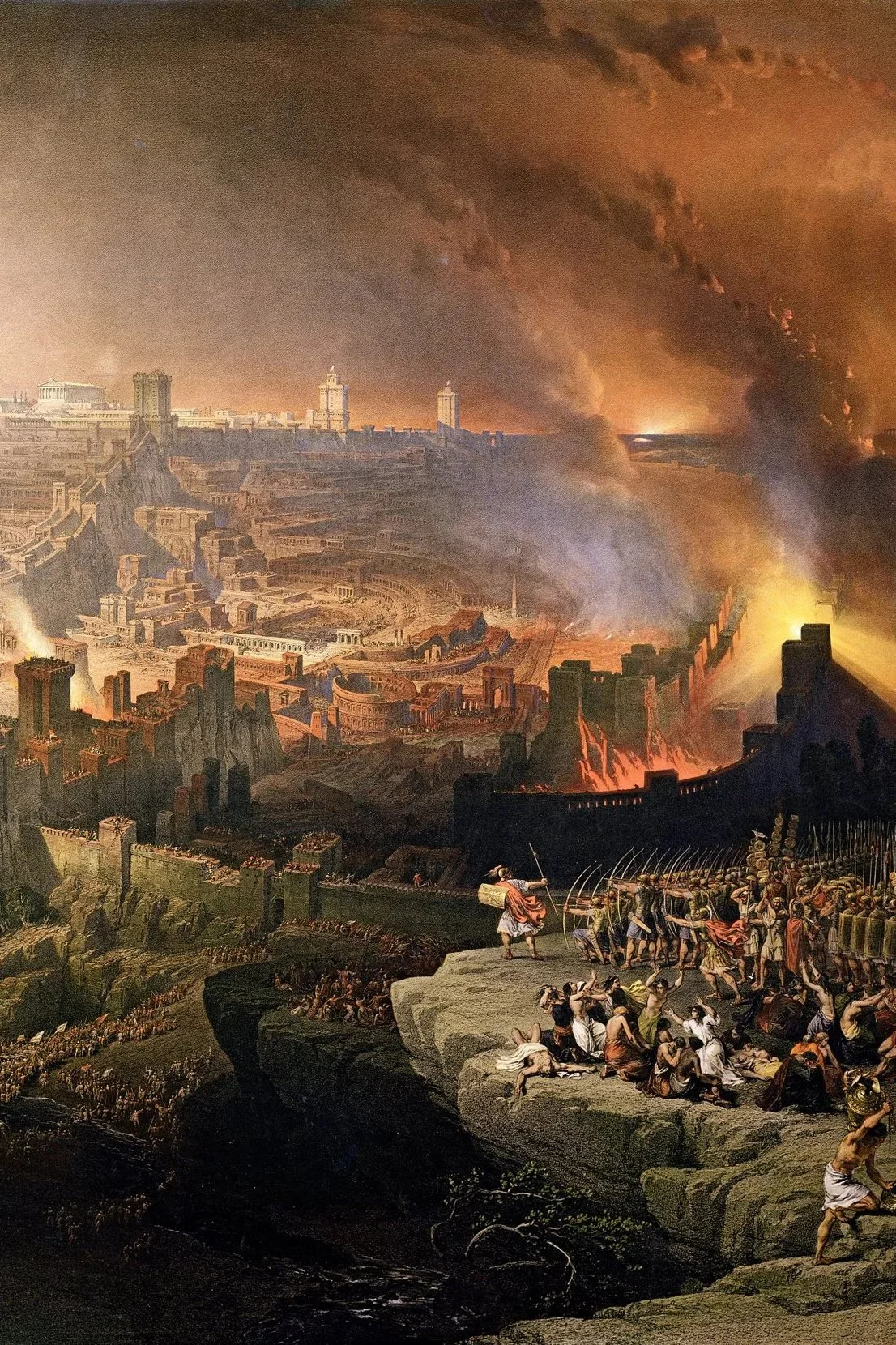
Revelation is primarily about God’s judgment on those who pierced Christ (Rev. 1:7) and we see the primary enemies of God’s people were the Gentile nations represented by the Roman Empire, and the unfaithful Jews who rejected Christ.
This article continues our series concerning eschatology, or the doctrines of “last things.” In this installment we continue discussing partial-preterism, now delving into the book of Revelation. When we read the apocalyptic or prophetic portions of the Bible, especially the book of Revelation, it is easy to assume that they are describing the end of the world. Yet, as we’ve discussed, these prophetic books of Scripture are anchored to God’s covenant dealings with his people in real history.
In my first article on partial-preterism, we saw how Daniel 9’s prophecy of the Seventy Weeks and Jesus in his Olivet Discourse (Matthew 24, Mark 13, Luke 21) foresaw the collapse of Jerusalem and utter destruction of the Temple as the climax of the Old Covenant. Here, we examine how Revelation completes that story, showcasing the judgment and end of the Old Covenant world, and the reign of Christ and his people in the New Covenant world.
Revelation as Covenant Prophecy
In an earlier article concerning the dating of Revelation, I discussed how the Apostle John was exiled by the Roman empire to the island of Patmos where he saw the visions contained in the book of Revelation, and John wrote these visions down to warn the churches of Asia Minor of an imminent crisis. The book begins with these words:
“The revelation of Jesus Christ, which God gave him to show to his servants the things that must soon take place…for the time is near” (Revelation 1:1, 3b ESV emphasis mine).
These words do not vaguely refer to a time thousands of years in the future. They demand nearness. The drama that unfolds in this apocalyptic book, then, primarily concerns events soon to unfold in the first century, climaxing in the fall of Jerusalem and the end of the Old Covenant temple system. The visions portray, in heavenly symbols, what Jesus had prophesied in the Olivet Discourse: “not one stone [of the Temple] will be left upon another” (Matthew 24:2 ESV).
Revelation is not a roadmap for predicting the end of time but a declaration that Christ’s kingdom has triumphed.
Partial-preterists, in fact, hold that Revelation was written in the mid-’60s AD during the reign of Nero, and several internal clues in Revelation point in that direction:
The Temple still stands. John is told to “measure the temple of God” (Revelation 11:1-2 ESV). This would be meaningless if the Temple were already destroyed.
The beast fits Nero. The sea beast imagery of Revelation 13 and 17 clearly matches the vision of Daniel 7. It concerns the empire of Rome, and the little horn of Daniel 7 and Revelation 13’s beast having a head with a mortal wound, a mouth allowed to exercise authority to persecute the saints for forty-two months and uttering haughty and blasphemous words, and intense persecution of the saints all match Nero’s reign.
The infamous number of the beast–666 (Revelation 13:18 ESV) corresponds numerically exactly to the Hebrew spelling of Nero Caesar, which John likely wrote as a hidden clue to Christians of the first century.
Under Nero’s rule, the prophetic events that Jesus promised would occur within a generation to consummate the end of the Old Covenant age began. Intense persecution of the early church erupted in the empire. The Jewish war against Rome began in AD 66. Nero committed suicide by a head wound from a sword in AD 68, resulting in a year of chaos throughout the empire as four new emperors all ruled in the space of a year; as the tenth ruler, Vespasian, stabilized the empire; and his son Titus, a prince of Rome, destroyed Jerusalem, desecrated the Temple, and stone by stone tore it down. The symbolic visions of Revelation unfold within this charged historical context.
Completely unpacking Revelation from a partial-preterist perspective would take several books. For this article, I will walk through several major sections of Revelation and will examine how they trace the prophetic events of the years leading up to the destruction of Jerusalem in AD 70.
Revelation 6–The Four Horsemen and the Jewish War
“Now I watched when the Lamb opened one of the seven seals, and I heard one of the four living creatures say with a voice like thunder, ‘Come!’” (Revelation 6:1 ESV).
The opening of the first four seals releases four riders that mirror the escalating chaos of the years leading up to the destruction of Jerusalem in AD 70. The four horsemen consist of a rider on a white horse, given a crown and going out to conquer; a rider on a red horse, given a great sword so that men would make war; a rider on a black horse carrying scales, symbolizing famine and economic collapse; and on a pale horse, a rider named Death with authority to kill many throughout the land by sword, famine, and pestilence.
From the partial-preterist perspective these riders represent:
White Horse: represents Christ the King and his Gospel going forth, conquering the known world. James Jordan in his commentary writes: “Jesus is on the horse. He rides forth to conquer–overcoming and to overcome. Therefore the church also conquers. ‘Go therefore and make disciples of all nations.’” [1] The book of Acts and church history records how quickly Christianity spread throughout the known world in the first century.
The Red Horse: represents war and bloodshed. A civil war erupted in the Roman Empire, while the Jewish revolt took place in Judea. Even the various factions of the Jews fought each other during this war as God’s judgment fell on them. Tacitus wrote that “‘even as the enemy [the Romans] closed in on Jerusalem in AD 70, the Jews were still engaged in civil strife’...the civil war was so violent that the Jews did not even cease when the Romans first came against them.” [2]
The Black Horse: represents famine and economic collapse. Josephus and Tacitus wrote extensively of the horrific famine that occurred in Judea during the Jewish revolt. The food shortage caused an economic collapse and Josephus records that “during the siege [of Jerusalem] the Jews paid a talent for a measure of wheat.” [3]
The Pale Horse: represents Death, and Hades followed with him. Josephus recorded that over a million Jews died in the Jewish rebellion against Rome. He “indicates that death came to so many during the siege that there was no room to bury them. So the Jerusalemites threw the Jewish corpses over the city wall into the Kidron Valley trash heap below.” [4]
Revelation is primarily about God’s judgment on those who pierced Christ (Rev. 1:7) and we see the primary enemies of God’s people were the Gentile nations represented by the Roman Empire, and the unfaithful Jews who rejected Christ. Each of these four seals represent clear prophetic events that were connected to events of the first century. As Jesus promised in the final days of his ministry, judgment would come on those who rejected him and who would persecute his Church. The fifth seal opened in Revelation 6 describes all of the martyrs killed, crying out: “how long before you will judge and avenge our blood on those who dwell on the earth?” (Revelation 6:10 ESV). Their vindication would come soon.
Revelation 11–The Temple and the Two Witnesses
“Then I was given a measuring rod like a staff and I was told, “Rise and measure the temple of God and the altar and those who worship there, but do not measure the court outside the temple; leave that out, for it is given over to the nations, and they will trample the holy city for forty-two months. And I will grant authority to my two witnesses, and they will prophesy for 1,260 days, clothed in sackcloth” (Revelation 11:1-3 ESV).
In this passage of Revelation, John is told to measure the Temple, which is an unmistakable sign that the Temple still stood in the time of this vision. Verse two speaks of forty-two months of judgment when the Gentiles would trample the holy city. This precisely names the period of time from AD 67 - 70 when the Roman empire put down the Jewish revolt. These forty-two months symbolize the limited period of persecution (time, times and half a time–from Daniel 7) and mirror the forty-two months of Revelation 13 when Nero persecuted the Christians throughout the empire. These time references symbolize both the Neronian persecution of the saints which lasted roughly 3 and a half years from AD 64-68, and the judgment on Jerusalem from AD 67-70, which culminated in the destruction of the Temple.
The two witnesses represent the faithful prophetic witness of the Church, harkening back to Moses and Elijah, representing the Law and the Prophets, speaking against the apostate city of Jerusalem who killed their long-awaited Messiah: “and their dead bodies will lie in the street of the great city [Jerusalem] that symbolically is called Sodom and Egypt, where their Lord was crucified” (Revelation 11:8 ESV). Partial-preterists are divided on whether these two witnesses are literal prophetic figures like James the Just (the half-brother of Jesus and leader of the Jerusalem church, who was martyred just before the Jewish War began) and Jesus son of Ananus, a prophet recorded by Josephus as prophesying doom on Jerusalem during this same period until he was killed in Jerusalem; or, if the two witnesses here are a symbol referring to the faithful Church and its prophetic witness in Jerusalem during the final years before the destruction of the Temple. Their death and resurrection would symbolize the Church’s apparent defeat under persecution, followed by its vindication as Christ judged Jerusalem.
Revelation 11, then, portrays the very event that marked the end of the Old Covenant age—the destruction of the Temple and the vindication of the church.
Revelation 13 & 17-18: The Unholy Alliance of Rome and Apostate Israel
Revelation 13 introduces two beasts: one from the sea, and one from the land. Daniel 7, Revelation 13, and many other places in the Scriptures equate the sea with the Gentile nations, and we know from throughout the Bible that the “land” is a symbol that refers to Israel. As discussed above, the beast from the sea is imperial Rome, with its blasphemous claims to divine worship. The horns of the beast symbolize the emperors of Rome, and the number of the beast “666” points directly to Nero Caesar. The beast from the land is the false prophet—the priestly leadership of Israel, who rejected Christ for Rome and enforced the worship of the first beast, joining in the persecution of Christ’s followers. These forces would work hand-in-hand to fight to stamp out the early Church.
From the time Pompey entered Jerusalem to their partnership in the murder of Christ, and up until the launch of the Jewish revolt, the high priests in Jerusalem allied with Rome, and “the secular authority that Rome established in Israel often engaged in appointing her sacred high priests.” [5] Gentry writes in his commentary on Revelation that “John is effectively denouncing as tantamount to beast worship the (now redemptive-historically defunct and morally corrupt) temple system and worship forms, the Jewish religious establishment and its domineering control of religious values, along with her heinous alignment with Rome against Christ and his followers” [6]. In other words, it reflects an alliance with Satan. “In the Old Testament, the assembly of Israel was the ‘synagogue of the Lord;’ in Revelation it became the ‘synagogue of Satan.” [7]
This unholy alliance does not last, and Revelation 17-18 addresses the fall of Jerusalem as Rome destroys the great city. In Revelation 17, John writes of Jerusalem as a “great prostitute,” calling her “Babylon the great, mother of prostitutes and of earth’s abominations” (Revelation 17:5b ESV). This “great prostitute” sits on the beast full of blasphemous names, arrayed in purple and scarlet, and adorned with gold and precious stones—the very colors of the temple veil. In Revelation’s symbolic language, “Babylon,” that evil city that Jerusalem was once exiled to, is now Old Covenant Jerusalem, the unfaithful bride now judged for spiritual adultery. Her destruction marked the divorce of the Old Covenant and the wedding of the New.
The Lord uses the beast, Rome, to bring about the fall of Jerusalem. “And the ten horns that you saw, they and the beast will hate the prostitute. They will make her desolate and naked, and devour her flesh and burn her up with fire, for God has put it into their hearts to carry out his purpose by being of one mind and handing over their royal power to the beast, until the words of God are fulfilled” (Revelation 17:16-17 ESV).
Jerusalem was judged by Christ and destroyed by Rome. The Roman general Titus desecrated the Temple, setting up the Roman standards to be worshiped, and sacrificing unclean animals in the Temple before completely leveling it as he destroyed the city.
“Then I heard what seemed to be the voice of a great multitude, like the roar of many waters and like the sound of mighty peals of thunder, crying out, ‘Hallelujah! For the Lord our God the Almighty reigns. Let us rejoice and exult and give him the glory, for the marriage of the Lamb has come, and his Bride has made herself ready; it was granted her to clothe herself with fine linen, bright and pure’–for the fine linen is the righteous deeds of the saints” (Revelation 19:6-8 ESV).
After the fall of “Babylon the Great” (the destruction of Jerusalem) comes the marriage supper of the Lamb. The age of the Old Covenant came to an end, and the age of the New Covenant had come. The faithful bride—the Church—now takes the prostitute’s place. The beast and the false prophet (Rome and apostate Israel) are cast into the lake of fire, symbolizing their downfall. Revelation 20 speaks of Satan being bound, and thrown into the Abyss. The great deceiver, that ancient serpent, is now restrained, no longer able to halt the Gospel’s advance among the nations, beginning the millennial reign of Christ—not a literal thousand-year kingdom in the future, but the symbolic present reign of Christ through his Church on earth (more on this in future articles). Since AD 70, the Gospel has increased throughout the world, eventually overtaking and Christianizing the very Roman empire that was its great foe, and continuing to grow throughout the nations of the world to this day.
The Theological Implications of Partial-Preterism
Many Christians who have been influenced by dispensational and futurist readings of Revelation will struggle with partial-preterism because it seems that stars falling from the sky, the sun darkening, and the moon turning to blood cannot refer to the destruction of the Temple and Jerusalem in AD 70, but must refer to the end of the world. However, careful students of Scripture will know that apocalyptic language in Scripture follows a well-established pattern of cosmic imagery signifying God’s judgment on nations. For example, Isaiah 13 (against Babylon), Ezekiel 26 (against Tyre) Ezekiel 32 (against Egypt), and Joel 2 (describing the Day of the Lord) all use cosmic de-creation language to describe the collapse of a political or religious world and system, not the destruction of the physical universe. James Jordan in his book Through New Eyes, and his lectures on Revelation, argues that this cosmic or de-creation language is symbolic, and covenantal language, not literal astronomy where stars fall from the sky.
Our task is not to flee the world but to faithfully herald that the nations of the world belong to Christ, as we extend the healing leaves of the New Jerusalem (Revelation 22:2) into every sphere.
In the Olivet Discourse, Jesus spoke of the coming “end of the age,” the destruction of Jerusalem, and uses this same de-creation language in Matthew 24:29-31. This language is used here and in Revelation to speak theologically concerning the complete destruction of the Old Covenant world, with Christ ushering in the New Covenant world. Revelation’s fulfillment in AD 70 marks the close of the Mosaic economy, not the conclusion of world history. God’s judgment on Jerusalem was covenantal—Christ’s once and for all sacrifice had rendered the Temple obsolete (Hebrews 8:13). The Lamb who was slain now reigns (Revelation 5:6-10). Having conquered by his death and resurrection, he now exercises dominion through the proclamation of the Gospel. Revelation assures Christians that Christ is not waiting to rule, he rules now. The nations are his inheritance (Psalm 2, Revelation 11:15).
Why This Matters?
Partial-preterism doesn’t erase the future hope of the Church. We still await the end of the Millennium, with the visible return of Christ, the final resurrection, and the consummation of all things. But it reminds us that the victory has already been won. The great tribulation is behind us; the kingdom of Christ is advancing. That perspective frees the Church from the fear-mongering futurism of dispensationalism and grounds the Church instead in God’s faithfulness to his covenant with his people.
If much of Revelation was fulfilled in the first century, it means that the Church today lives in the age of the Lamb’s victory. The old order has passed away and the new has come. We don’t wait for Christ to begin his reign, we live under it. Our task is not to flee the world but to faithfully herald that the nations of the world belong to Christ, as we extend the healing leaves of the New Jerusalem (Revelation 22:2) into every sphere. For us, that’s not mere eschatology–it’s mission. The Lamb victoriously reigns, therefore the Church is called to labor to extend the kingdom throughout the world as the coastlands are waiting for his law (Isaiah 42:4).
Revelation is not a roadmap for predicting the end of time but a declaration that Christ’s kingdom has triumphed. The harlot has fallen, the Lamb now reigns, and his true bride, the Church, is bearing witness to his everlasting reign.
“Behold, I am making all things new” (Revelation 21:5 ESV).
Works Cited:
1 - James B. Jordan, Revelation Explained. Volume Two, Thunder: An Interpretation, ed. Dean W. Arnold (Chattanooga, TN: Chattanooga Historical Foundation, 2024), 179.
2 - Kenneth L. Gentry, The Divorce of Israel: A Redemptive-Historical Interpretation of Revelation Vol. 1. (Acworth, GA: Tolle Lege Press, 2024), 624.
3 - Ibid, 625.
4 - Ibid, 632.
5 - Kenneth L. Gentry, The Divorce of Israel: A Redemptive-Historical Interpretation of Revelation Vol. 2. (Acworth, GA: Tolle Lege Press, 2024), 1098.
6 - Ibid, 1101.
7 - Ibid.
Further Resources:
Kenneth Gentry’s The Divorce of Israel, Volumes 1 & 2
James B. Jordan’s Revelation Explained series, Volumes 1 - 3
RC Sproul’s The Last Days According to Jesus
